What's Stored on an NFC Menu Card? Just a Link (Privacy Facts)
October 23, 2026
An NFC menu card stores only a simple web link to the restaurant's digital menu, nothing more. No guest information, no personal data, and no tracking details are written to the card itself, which means tapping an NFC menu is privacy-friendly for your guests.
As restaurant and cafe owners consider switching to digital menus accessed through NFC technology, questions about data privacy naturally arise. Understanding exactly what these cards contain and how they interact with guest phones helps you answer customer questions confidently and make informed decisions about your menu technology.
The Simple Contents of an NFC Menu Card
Inside each NFC menu card is a tiny chip that stores a small amount of data, typically just a web address (URL). When a guest holds their phone near the card, the phone reads this URL and opens it in the browser, displaying your digital menu. That's the complete transaction.
The card itself cannot store guest information, cannot write data to phones, and cannot track who has tapped it. Think of it like a printed QR code, but contactless: it simply points to a location on the internet. The NFC chip in these cards typically holds between 144 and 888 bytes of data, enough for a web link and perhaps a few extra characters, but nowhere near enough to store databases or tracking information.
The technical range of NFC is just a few centimetres, so the interaction only happens when a guest deliberately brings their phone very close to the card. This isn't a technology that broadcasts to everyone in the room or tracks people walking past.
How Guest Phones Read NFC Cards
Modern smartphones handle NFC menu cards without requiring guests to download any app. iPhone XS, XR and newer models automatically detect NFC tags in the background, so guests simply hold their phone near the card and a notification appears. Older iPhones need an app to read NFC tags. Android phones need NFC switched on in settings, which many users already have enabled for contactless payments.
When a phone reads the card, it's a one-way communication: the card transmits its stored URL to the phone, the phone's browser opens that link, and the interaction is complete. The card doesn't know what type of phone tapped it, who owns the phone, or how many times that particular phone has visited before.
What Happens on the Web Server
While the NFC card itself stores no guest data, the web server hosting your digital menu operates like any website. When a guest's browser loads your menu, the server may log standard technical information such as the time of access, the type of device, and the language preference the browser sends. This is how your menu can automatically translate into the guest's language, matching their phone's settings.
This server-side data is separate from the NFC card entirely. The card remains a simple, passive link. Restaurant owners who want to understand what data their digital menu platform collects should review that platform's privacy policy, just as they would for any online service they use.
Can NFC Cards Be Changed or Hacked?
NFC tags are technically rewritable, meaning the data on them can be changed with the right equipment. However, most NFC menu cards are locked after the initial link is written, preventing any changes. A locked NFC tag cannot be altered, even by someone with NFC-writing tools.
Because the card contains only a web link, there's no sensitive information stored on it that could be stolen. The main security consideration is ensuring the link points to the legitimate menu website. Restaurants should obtain their NFC cards from trustworthy suppliers and verify that the link programmed onto each card is correct when received.
Privacy Advantages for Your Guests
From a guest privacy perspective, NFC menu cards offer a clean experience. Guests don't create accounts, don't enter email addresses, and don't download apps that might request location permissions or contacts access. They simply view a menu in their browser, exactly as they would if they typed your website address manually.
For restaurants using services like TapToMenu, venues can create their digital menu with just a name and email, preview exactly what guests will see, and order NFC cards only when satisfied. The guest experience remains simple: tap, view menu, done. If you've added your Google review link, happy guests might see a gold-star button and can leave a review in one tap, but this is entirely optional on their part.
Frequently Asked Questions
Does an NFC menu card collect information about guests who tap it?No. The card itself is passive and only transmits the web link stored on it. It cannot collect, store, or transmit information about who tapped it or what type of phone they used.
Can someone copy the data from my NFC menu card?Yes, the web link stored on the card can be read by anyone with an NFC-enabled phone, just as anyone can photograph a QR code. Since it contains only your public menu link, there's no confidential information to protect.
Do guests need to enable any permissions to use an NFC menu?No special permissions are needed. On newer iPhones, NFC reading works automatically in the background. Android users need NFC enabled in settings, which many already have on. No app downloads or permission grants are required.
Tap the card. The menu opens.
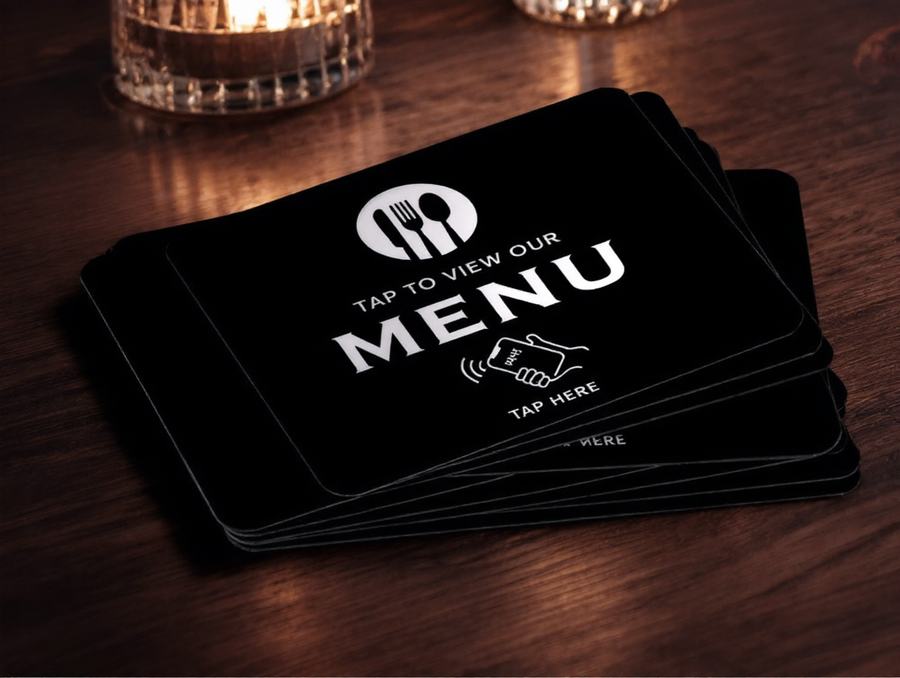
An NFC menu card for restaurants and cafes. Guests hold their phone near it and your menu opens instantly, automatically translated into their language. No app, no printing new menus.
Order your cards